The Man with the Einstein Hair and the Soul of the Trading Floor
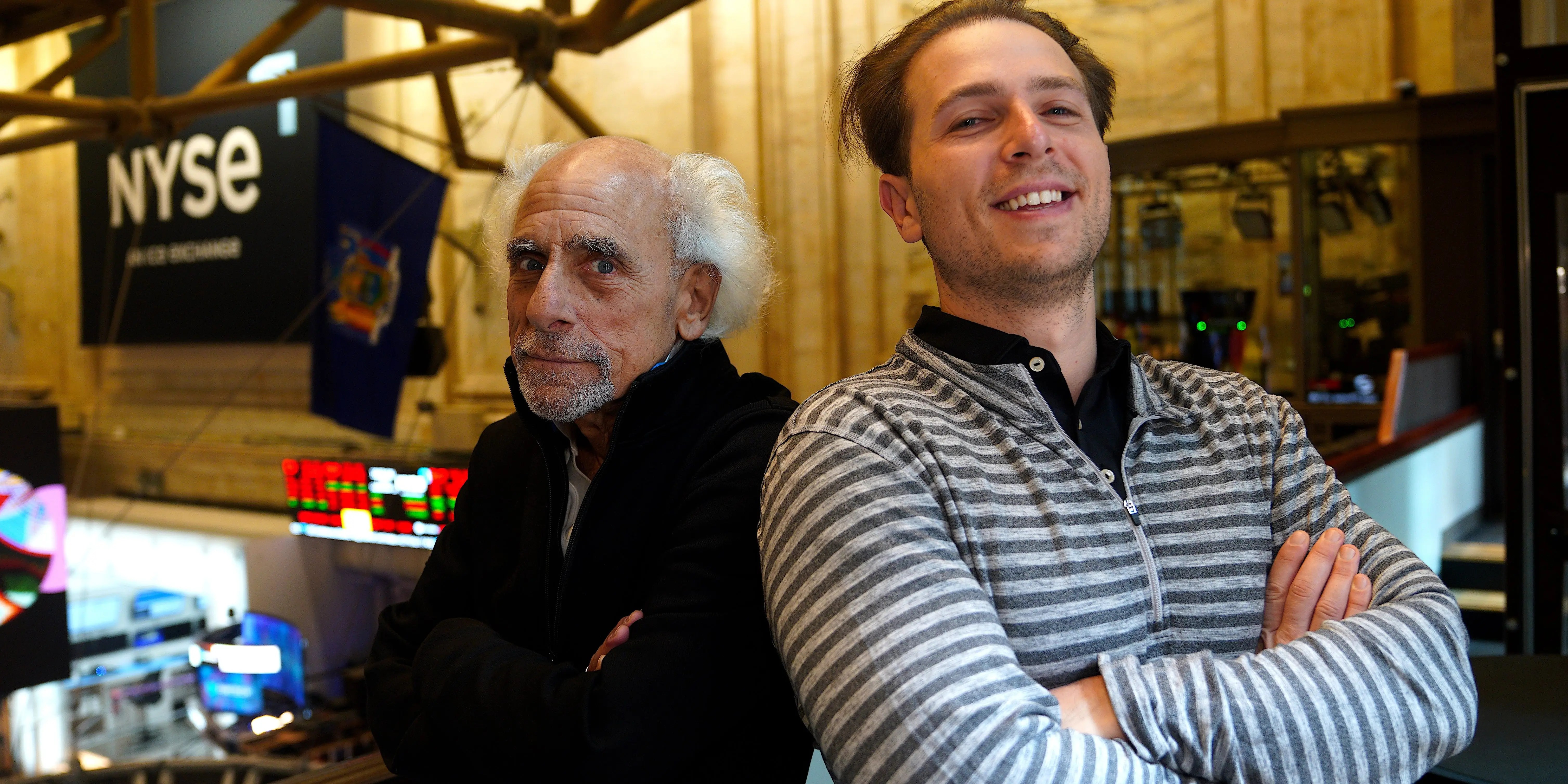
If you walk onto the floor of the New York Stock Exchange today, amidst the quiet hum of modern execution systems and the ghosts of roaring auction pits, you will inevitably spot a shock of wild white hair moving with frenetic energy. Peter Tuchman, famously dubbed the Einstein of Wall Street, has become an enduring icon of an era that digital finance has largely tried to erase. Personally, I think his survival—and his recent elevation to a life-size bronze sculpture on the floor—says something profound about our collective psychological need for tangible humanity in an increasingly cold, automated world. What many people don't realize is that the debate over AI on Wall Street isn't just a technical discussion about latency or headcount reduction; it is a profound existential crisis about whether trust can ever truly be synthesized by an algorithm.
Theatricality Versus Efficiency in Modern Finance
From my perspective, the steady digitization of global markets was supposed to strip away all the theater, leaving behind pure, unadulterated mathematical efficiency. For decades, we watched the headcount on trading floors shrivel from thousands to a relative handful, as screens replaced shouting brokers and automated execution systems took over the heavy lifting. Yet, Tuchman's enduring presence reminds us that finance has never been purely mathematical. One thing that immediately stands out is how financial institutions paradoxically cling to human faces precisely because the back-end has become so ghostly and opaque. When billions of dollars shift in milliseconds based on complex machine learning models, institutional clients still crave a heartbeat on the other end of a complex line. In my opinion, Tuchman isn't just surviving as a market mascot; he is performing a vital psychological anchor role that no language model or deep-learning network could ever replicate.
The AI Panic and the Illusion of the Scutwork Fallacy
What this really suggests is that the current panic over artificial intelligence replacing entry-level finance jobs is touching a nerve that has been raw for twenty years. Wall Street firms are spending billions on AI to chew through the junior-level scutwork—the spreadsheets, the compliance checks, and the early-morning modeling that generations of analysts endured as a rite of passage. If you take a step back and think about it, cutting out the bottom rung of the career ladder doesn't just change cost structures; it fundamentally breaks the apprenticeship model of human expertise. If machines do all the junior thinking, where do senior judgment and intuition come from? What makes this particularly fascinating is that while corporate executives look at AI and see clean efficiency gains, seasoned floor brokers like Tuchman and his son Benny see a hollowed-out ecosystem sliding dangerously toward total alienation.
The Sanctuary of the Trading Pit
A detail that I find especially interesting is how Tuchman’s personal narrative intertwines with his public advocacy. His pivot to social media and public-facing education during the pandemic wasn't just a clever media strategy; it was a deeply human response to profound personal grief, finding solace in a community that functioned like family when his own world was breaking apart. This raises a deeper question: why do we fight so hard to preserve obsolete jobs in the face of unstoppable technological progress? Personally, I suspect it is because we instinctively know that once we surrender the last physical outposts of human interaction, we enter a sterile realm where transactions happen without relationships, and value is calculated without values. Tuchman’s refusal to retire—his stubborn declaration that he is having too much fun—is less about trading stocks and more about defending the right to exist in the physical room where history happens.
If artificial intelligence eventually absorbs every complex execution and institutional trade, the bronze sculpture of Peter Tuchman standing proudly on the NYSE floor might end up being more than a monument to a colorful broker. It could well serve as a lonely monument to a time when commerce still required a pulse. What we are witnessing isn't just the evolution of a market; it is a test of what we value more: frictionless perfection or messy, unpredictable human connection. And frankly, if the future of finance looks entirely pristine and artificial, I have a feeling we're going to miss the wild hair and the shouting a hell of a lot more than the algorithms care to admit.