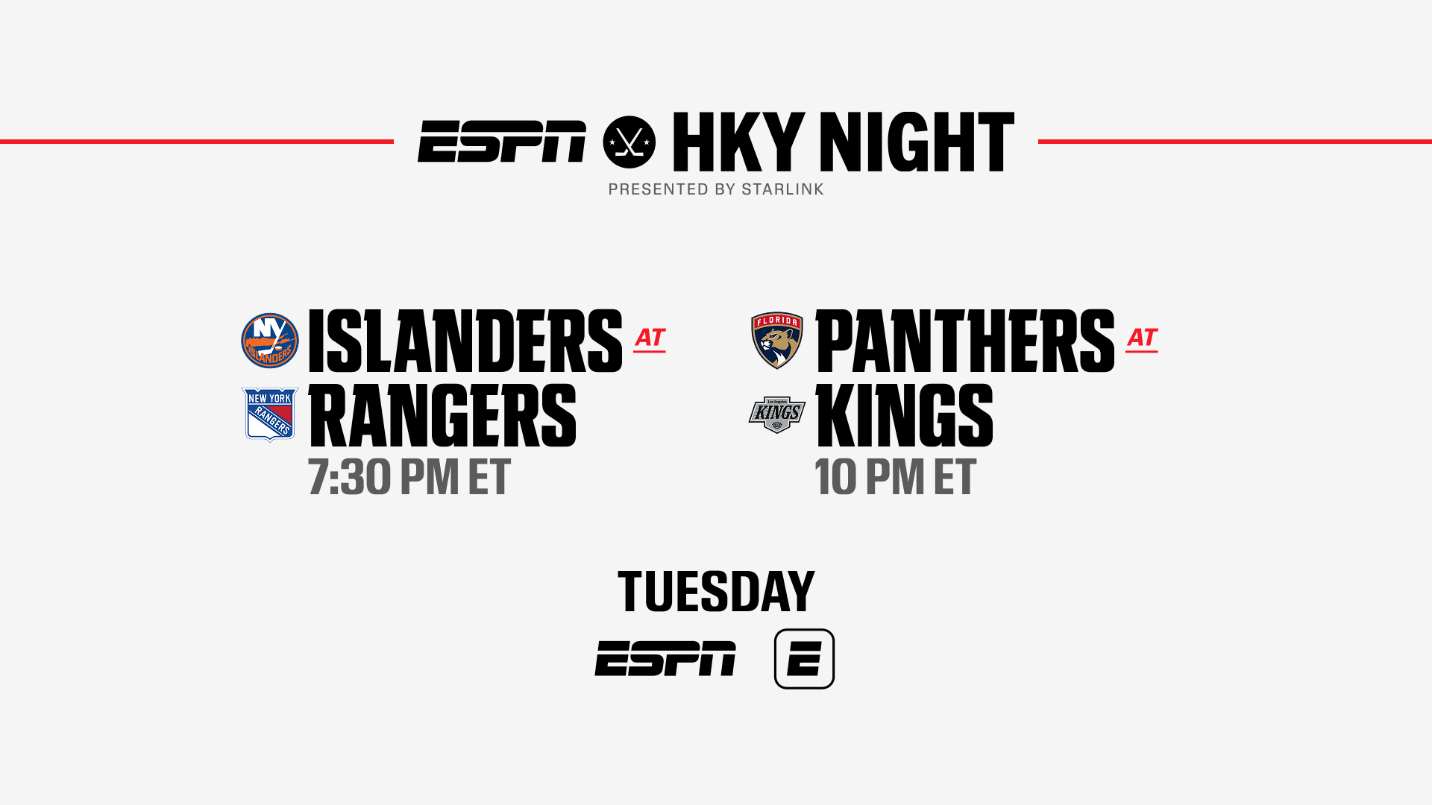
When it comes to sports broadcasting, there’s something uniquely electric about a rivalry—especially when it’s played out on the ice. ESPN’s upcoming Tuesday NHL doubleheader isn’t just another slate of games; it’s a masterclass in how to capture the essence of competition, regional pride, and the sheer unpredictability of hockey. What makes this particularly fascinating is how ESPN has strategically paired the New York Islanders vs. New York Rangers with the Florida Panthers vs. Los Angeles Kings. On the surface, it’s a doubleheader. But if you take a step back and think about it, it’s a study in contrasts: the gritty, historic rivalry of the New York teams versus the sun-soaked, high-octane matchup of the Panthers and Kings.
One thing that immediately stands out is the Islanders-Rangers game. New York rivalries are always intense, but this one feels different. The Islanders, often seen as the underdog in this dynamic, have been quietly building a roster that could challenge the Rangers’ dominance. What many people don’t realize is that this isn’t just about hockey—it’s about the cultural divide between Long Island and Manhattan, between the blue-collar grit and the big-city swagger. ESPN’s decision to lead with this game isn’t just a scheduling choice; it’s a statement about the narrative power of sports.
The Panthers-Kings matchup, on the other hand, feels like a sleeper hit. From my perspective, this game is a preview of two teams that could surprise everyone this season. The Panthers, with their explosive offense, and the Kings, with their blend of veteran leadership and young talent, are both dark horses in their respective conferences. What this really suggests is that ESPN isn’t just broadcasting games—they’re curating storylines that could define the season.
A detail that I find especially interesting is the commentator lineup. Bob Wischusen and Ray Ferraro for the Islanders-Rangers game? That’s a pairing that brings both historical context and tactical insight. And John Buccigross with Cassie Campbell-Pascall for the Panthers-Kings game? That’s a dynamic duo that can break down the game while keeping it accessible for casual viewers. Personally, I think ESPN’s commentator choices are as much a part of the storytelling as the games themselves.
But let’s not forget the broader implications here. ESPN’s exclusive NHL slate isn’t just about this week’s games—it’s about positioning the network as the go-to destination for hockey. If you take a step back and think about it, this is a strategic play in the larger battle for sports broadcasting supremacy. With the NHL gaining traction in non-traditional markets, ESPN is betting big on hockey’s growth potential. What this really suggests is that the network sees hockey as more than just a winter sport—it’s a year-round conversation.
In my opinion, the real story here isn’t just the games or the commentators—it’s the cultural and strategic significance of these matchups. The Islanders-Rangers game is a reminder of why rivalries matter: they give us something to root for, something to argue about, and something to remember. The Panthers-Kings game, meanwhile, is a glimpse into the future of the NHL, where teams from non-traditional markets are becoming contenders.
This raises a deeper question: What does it mean for the NHL when networks like ESPN invest so heavily in storytelling? Is it just about ratings, or is it about building a connection with fans? From my perspective, it’s both. ESPN isn’t just broadcasting games—they’re creating narratives that resonate with viewers, whether they’re die-hard fans or casual observers.
As we look ahead to Thursday’s matchup between the San Jose Sharks and St. Louis Blues, it’s clear that ESPN is playing the long game. What makes this particularly fascinating is how the network is using these games to build momentum for the entire season. The Sharks, a team in transition, against the Blues, a perennial contender—it’s another contrast that highlights the diversity of the NHL.
In the end, what stands out to me is how ESPN is transforming the way we watch hockey. It’s not just about the games; it’s about the stories, the rivalries, and the moments that make sports unforgettable. Personally, I think this is just the beginning of a new era for NHL broadcasting—one where the games are just the starting point for a much larger conversation. And if you ask me, that’s something worth tuning in for.