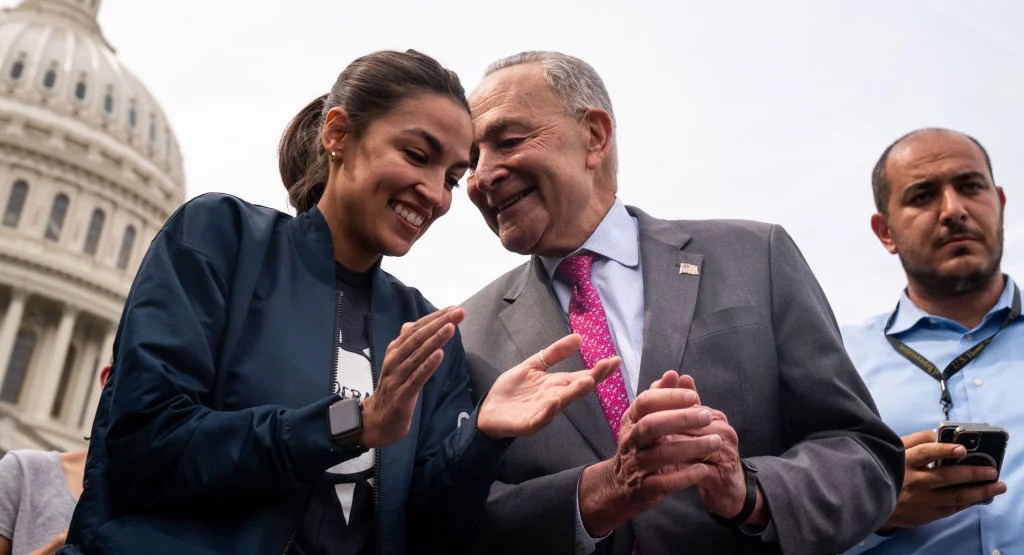
The battle for healthcare coverage in New York has taken an intriguing turn, with Democrats pushing a bill in Congress to restore funding for a vital public insurance program. This move, led by Rep. Alexandria Ocasio-Cortez and Sen. Chuck Schumer, aims to undo the devastating cuts imposed by Congressional Republicans and President Trump, which left hundreds of thousands of New Yorkers without access to essential healthcare.
What makes this particularly fascinating is the political strategy behind it. By introducing this bill just weeks before midterm elections, Democrats are putting the spotlight on healthcare, a key issue for many voters. They're also daring Republicans to either support the restoration of coverage or risk being seen as complicit in the cuts.
The Impact of the Cuts
The cuts to the Essential Plan, a premium-free insurance program, have had a significant impact on New Yorkers. Prior to the restrictions, the plan provided coverage to around 1.7 million individuals, with an income limit of $40,000 for individuals. This threshold was drastically reduced to $32,000, resulting in an estimated 450,000 people losing their coverage.
However, the situation is more complex than it seems. While some were able to maintain coverage due to income changes, others enrolled in private plans with high premiums, and a significant number, around 177,841, remain uninsured. This raises a deeper question about the accessibility and affordability of healthcare for those who need it most.
A Political Chess Move
The timing of this bill is no coincidence. With midterm elections approaching, Democrats are using this as an opportunity to highlight the consequences of Republican policies. By putting the onus on Republicans to either support the restoration or face the wrath of voters, they're employing a strategic maneuver.
In my opinion, this move is a clever way to shift the narrative and put pressure on Republicans to either backtrack on their previous decisions or risk losing support. It's a high-stakes game of political chess, and the outcome could have significant implications for healthcare access in New York and beyond.
Broader Implications
This isn't just about New York; it's about setting a precedent. The bill, if passed, would not only restore coverage for New Yorkers but also allow other states to expand eligibility for similar programs. This has the potential to impact millions of Americans who rely on public insurance.
What many people don't realize is that these cuts have a ripple effect, impacting not just individuals but also healthcare providers and clinics. With fewer insured patients, healthcare services may face cuts, leading to a downward spiral of reduced access and quality of care.
A Step Towards Equity
The Essential Plan was designed to provide a safety net for those who struggle to afford private insurance but don't qualify for Medicaid. By restoring funding and expanding eligibility, Democrats are taking a step towards healthcare equity.
Personally, I believe that access to healthcare is a fundamental right, and initiatives like the Essential Plan are crucial in ensuring that those who are most vulnerable have the support they need. This bill, if successful, could be a significant victory for healthcare advocates and a step towards a more equitable society.
Conclusion
The fight for healthcare coverage in New York is a microcosm of a larger battle being waged across the country. With this bill, Democrats are not only addressing an immediate need but also sending a powerful message about the importance of accessible and affordable healthcare. It's a bold move, and one that could have far-reaching consequences for the future of healthcare policy in the United States.