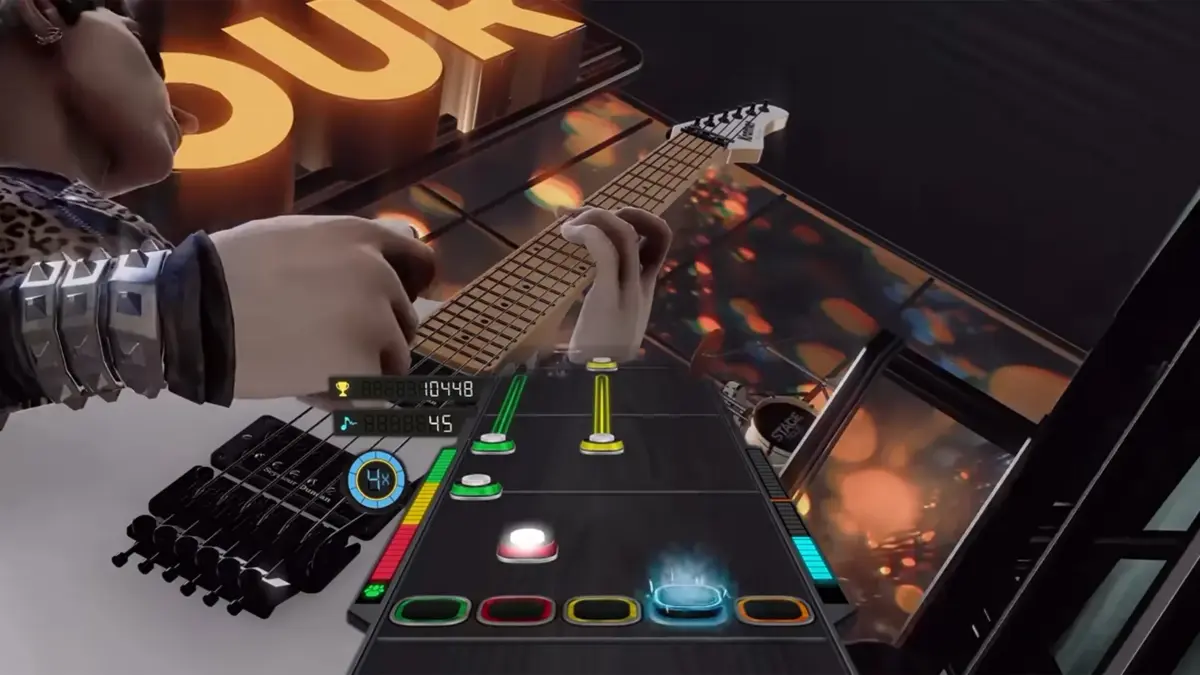
For a long time, the plastic-guitar-shaped hole in the gaming landscape felt like a permanent scar. We all remember the golden era of plastic instruments—living rooms cluttered with drum kits, messy peripheral wires, and screaming into a USB microphone until our throats bled. Personally, I think we took that era completely for granted. When the rhythm game bubble burst, it left behind a quiet desperation among fans who were left wondering if we would ever digitally shred on a five-fret controller ever again. That is precisely why the arrival of Stage Tour this coming December feels less like a simple product launch and more like a long-awaited family reunion.
What makes this particularly fascinating is how the industry is finally daring to look backward to move forward. From my perspective, gaming has spent the last decade chasing hyper-realism and live-service fatigue, completely forgetting the pure, unadulterated joy of failing a song because you missed a solo by a millimeter. Stage Tour isn't just trying to fill a niche; it is attempting to resurrect an entire cultural ritual. With industry veterans behind the wheel and hardware partnerships locked in with giants like Gibson and Kramer, they are signaling that this isn't a cheap cash-grab nostalgia trip. They are building a legitimate spiritual successor, and honestly, it about time someone did.
The Soundtrack Strategy and the Beauty of Musical Whiplash
One thing that immediately stands out as you look over the rolling wave of song reveals is the sheer, beautiful chaos of the setlist. We are talking about a lineup that swings wildly from Dream Theater’s progressive technical wizardry to Powerman 5000’s nu-metal bounce, with detours into Arch Enemy, Sabaton, and even Blur. If you take a step back and think about it, this kind of musical whiplash is the exact heartbeat of what made games like Guitar Hero and Rock Band so culturally vital in the first place. They forced metalheads to appreciate synth-pop and indie kids to attempt thrash metal.
In my opinion, curating a rhythm game tracklist is an exercise in cultural anthropology. It is never just about picking good songs; it is about finding tracks that translate physically to the rhythm of pushing colored plastic buttons or hammering a plastic snare. When I see tracks like Megadeth's 'Tornado Of Souls' or Slipknot's 'Psychosocial' sitting alongside modern heavyweights like Bad Omens or Babymetal and Electric Callboy's chaotic crossover hits, what this really suggests is a complete refusal to pander to just one era of rock and metal. It bridges generations. What many people don't realize is that playing these songs on a plastic controller unlocks a physical appreciation for the arrangement that casual listening just cannot touch. You don't just hear the syncopation; your fingers live it.
The Hardware Gamble in a Wireless World
Another detail that I find especially interesting is the decision to support legacy peripherals alongside an entirely new line of custom instruments. This is a massive logistical tightrope walk. In an era where everything is digital, wireless, and streamlined, asking players to dust off their old Xbox or PlayStation peripherals—or buy brand new ones—is a bold gamble. But from where I'm sitting, it is the only way this could possibly work. A rhythm game played on a standard gamepad is just an ordinary rhythm game. The magic lives in the peripheral; the weight of the neck, the tactile click of the strum bar, the rebound of the drum pads.
The partnership with historic guitar brands like Gibson and Kramer adds an unexpected layer of authenticity that elevates the whole project. A detail that I think gets lost in modern gaming discussions is tactile feedback. We live in a world of smooth glass screens and membrane keyboards, where physical resistance has been largely engineered out of our daily tech. Returning to a plastic guitar or an electronic drum kit scratches a very deep, primal itch for physical interaction with our media. If Stage Tour can nail the hardware latency and feel right out of the gate this December on current-gen consoles and PC platforms, they might just capture lightning in a bottle twice.
Where Do We Go From Here?
This raises a deeper question about what we actually want from our entertainment as we grow older. Are we just chasing ghosts of our teenage years, or is there genuine artistic merit in reviving these defunct gaming subgenres? Personally, I lean heavily toward the latter. Music games taught a whole generation how to listen closer, how to pick apart complex arrangements, and how to share musical discovery with friends in the same physical room—a practice that feels increasingly endangered in our hyper-isolated digital spaces.
If you take a macro view of the entertainment landscape, everything cyclical eventually returns when the generational nostalgia peaks. But what makes Stage Tour different is that it isn't just coasting on memories; it is stepping into a modern ecosystem with Steam, Epic Games, and Nintendo Switch 2 support, ready to see if modern gamers still have the wrist stamina for a brutal guitar solo. A detail that stays with me is the sheer breadth of over 90 planned songs, blending the heavy icons with unexpected modern pop and indie cuts. If they pull this off, December 10th won't just mark the release of a new game—it might just mark the night the living room band gets back together.