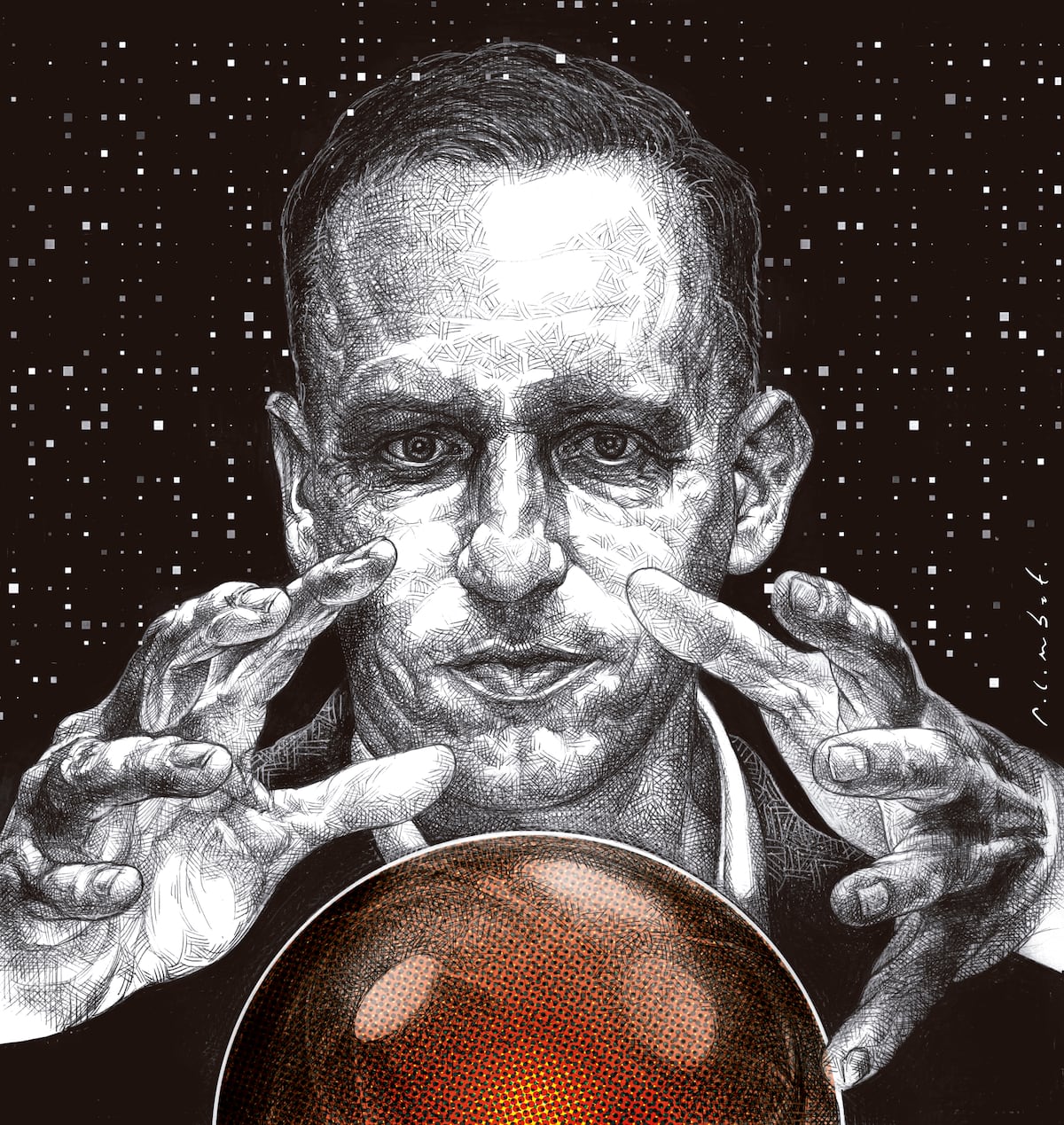
A decade after quietly tipping a high-profile legal battle that brought down a tabloid, Peter Thiel stands as one of the most influential figures in the modern tech and political landscape. Co-founder of PayPal, early investor in Facebook, and the driving force behind data-mining giant Palantir, Thiel has spent decades cultivating a worldview that explicitly rejects liberal democracy in favor of rule by tech-driven elites.
From Silicon Valley Outsider to Political Kingmaker
Thiel’s trajectory shifted dramatically following the 2016 election, where his early support for Donald Trump helped launch a new era of populist nationalism in American politics. Over the years, his influence has extended far beyond software and venture capital. Allies and former employees, such as Vice President J.D. Vance, have risen to positions of immense national power, carrying forward a brand of anti-establishment conservatism deeply intertwined with Silicon Valley interests.
Critics argue that Thiel’s philosophy masks a fundamental contradiction: while preaching libertarian self-reliance and condemning government oversight, his enterprise relies heavily on massive public contracts. Palantir, named after the seeing stones of J.R.R. Tolkien’s legendarium, was initially backed by a CIA contract and now supplies critical data-processing architecture to governments and military agencies worldwide.
Apocalyptic Rhetoric and Elite Rule
In recent years, Thiel has increasingly turned to religious and philosophical concepts to frame his worldview, warning audiences about the perils of regulating artificial intelligence and invoking apocalyptic warnings regarding the "Antichrist." Observers note that his intellectual framework draws heavily on the theories of French philosopher René Girard—particularly ideas surrounding mimetic desire, societal scapegoating, and the necessity of elite control to stave off mass violence.
This apocalyptic framing has drawn sharp reactions from observers trying to make sense of the billionaire's worldview. As one commenter put it:
Idealogues are an odd bunch. They can be quite intelligent, but say the dumbest shit because it fits their ideology. You don't get to Peter Thiel levels of wealth by being a dumass.
Others view the rise of these tech oligarchs through a more critical psychological and sociological lens, arguing that their formative years in tech culture shaped their disdain for conventional social systems:
These guys are former seriously dejected members of society who snaked their way to being technocrats by positioning themselves on the backs of public funds, after growing up socially isolated.
The Quest for Autonomy
Thiel’s ambitions extend well beyond traditional corporate borders. Having recently acquired property in Argentina and forged ties with Javier Milei’s administration, he continues to pursue long-held dreams of establishing autonomous charter cities operating independently of national laws—a concept previously tested through urban settlement projects in Honduras.
Whether viewed as a visionary pioneer accelerating human progress or a dangerous oligarch dismantling democratic norms, Thiel remains steadfast in his conviction that traditional institutions are obsolete. For a man who believes that monopolies are the true mark of success and that elite visionaries should command the resources of society, the future is not something to be predicted—it is something to be engineered.


